

- 30-day returns
- Fast shipping
- Secure payments
- Over 300,000 products
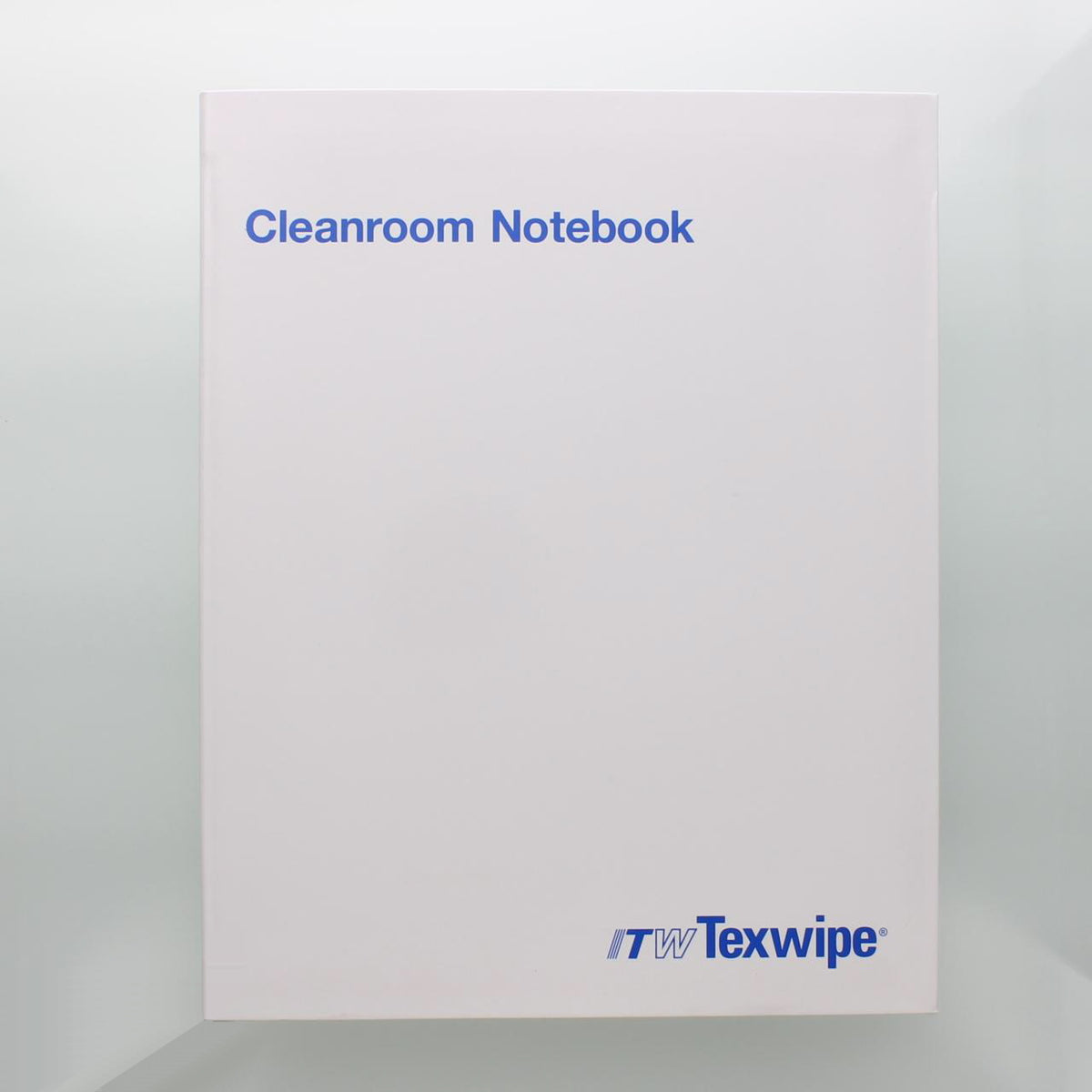
Texwipe TX5708 TexWrite® 22 Cleanroom Notebook — 8.5" x 11", Blue, College-Ruled (Hard-Bound)
TX5708 is a permanent-bound cleanroom notebook built for controlled documentation where ordinary office notebooks can introduce paper dusting, ink transfer, and uncontrolled page handling. TexWrite® 22 Cleanroom Notebooks are designed to serve as a legal document: each page is individually numbered, an index supports fast retrieval, and each page includes dual signature lines plus project and notebook identification fields.
For over 35 years, SOS and Texwipe have been close partners, and SOSCleanroom is the authorized Master Distributor of ITW Texwipe for the United States market. That relationship supports continuity of supply, consistent product lineage, and fast access to manufacturer documentation when QA/QC teams are standardizing cleanroom stationery.
Published configuration (TX5708)
- Notebook size: 8.5" x 11" (216 mm x 279 mm)
- Color: Blue
- Ruling: College-ruled
- Pages: 100 pages; 96 numbered pages (index included for retrieval)
- Binding: Sewn, permanent-bound flexi-cover book
- Thread: Sewn with silicone-free thread
- Cover protection: Mylar® gloss film laminate; Mylar® sealed cover (chemical-resistant cover noted in manufacturer materials)
- Paper: Low particle cleanroom paper; cleanroom processed and packaged
- Packaging: 10 notebooks per box (case)
- Cleanroom environment: ISO Class 3–8; (legacy) Class 1–100,000; EU Grade A–D
- Autoclave: Autoclaving is not recommended
- Country of origin: Made in USA (per Texwipe TDS)
Low particle and fiber generation — and the reality check
TX5708 is built to minimize contamination from particles and fibers during documentation. Even so, no paper product is truly “lint-free.” The cleanroom result depends on handling discipline: where the notebook is opened, how pages are turned, and what touches the paper (gloves, sleeves, tools, pens).
Where technicians and engineers use it
- Critical recordkeeping and controlled lab notebooks (project traceability, development runs, engineering trials).
- Good Laboratory Practices (GLP) documentation support where page numbering, signature lines, and index-based retrieval matter.
- Cleanroom and controlled manufacturing documentation where paper dusting and uncontrolled notebook materials create investigation noise.
Compatibility notes (wipe-down tolerance)
- Cover exposure: The cover is protected with a Mylar® gloss film laminate / Mylar® sealed cover. Specific solvent compatibility (IPA, DI water, other chemistries) is not stated in the published TX5708 notebook datasheets.
- Practical approach: If wipe-down is required by your SOP, test your exact wipe chemistry and technique on the closed cover first (lightly dampened wiper, straight strokes, full dry time). Avoid saturating page edges to prevent wicking, tide marks, and increased paper dusting after dry-down.
- Do not autoclave: Autoclaving is not recommended; use documentation products explicitly rated for autoclave cycles when your program requires it.
Handling discipline
- Control the “paper zone”: Keep the notebook out of first-air and away from exposed critical surfaces. Document at a stand/cart edge, then close the book.
- Glove management: Handle pages only with clean gloves. If you touched powders, adhesives, lubricants, or chemical residues, change gloves before writing.
- Page-turn technique: Turn pages deliberately from corners with minimal rubbing. Avoid rapid page flipping that can mobilize particles.
- Pen control: Standardize a cleanroom-approved pen/marker in your SOP. Allow ink to dry before closing the notebook to reduce offset transfer.
- Correction behavior: Avoid aggressive erasing or scraping tools across the page. Abrasion increases paper dusting; use your site’s approved correction method (often strike-through/initial/date).
Common failure modes technicians actually see
- Smearing and ink transfer: Common root causes include wet gloves, solvent carryover, or closing pages before ink dry-down. Prevent with glove moisture control, standardized writing instruments, and a consistent write-to-dry cadence.
- Paper dusting (particle shedding): Driven by abrasion (rubbing pages on benches, aggressive page turning, scraping/erasing). Prevent by keeping the notebook closed when moving, turning pages slowly, and avoiding page abrasion.
- Residue transfer to pages: Happens when open pages contact benches, sleeves, or contaminated gloves. Prevent by using a dedicated clean writing surface and keeping open pages off worktops.
- Edge damage and fraying: Often caused by repeated handling at the same corner or carrying the notebook open. Prevent by handling at varied contact points and transporting closed.
Typical contamination characteristics
Values below are published as typical analyses. Use them for qualification planning and contamination-risk reviews.
| Property | Typical value | Test method (as published) |
|---|---|---|
| Particles (>0.5 µm) | 4.8 million particles/m² | TM5 (minimal stress release) |
| Sodium | 85 ppm | TM12 (Capillary Ion Analysis) |
| Chloride | 50 ppm | TM12 (Capillary Ion Analysis) |
Documentation
SOS-hosted datasheet PDF (DS-5708, Effective: August 2011): Click Here
Texwipe product page (TX5708): Click Here
Texwipe Technical Data Sheet PDF (TexWrite® Cleanroom Notebooks, TEX-LIT-TDS-044 Rev.01-07/18): Click Here
If you have any questions please email us at Sales@SOSsupply.com or give us a call at (214)340-8574.
OR check out the AI ChatBot powered by SOSCleanroom data libraries - give it a try!
THIS IS NEW FOR 2026!
© 2026 SOS Supply. All rights reserved.
Age group18+
CategoryStationery
Country of originUSA
GenderUnisex
ManufacturerSpecialty Optical Systems / SOS Cleanroom
MpnTX5708 CASE
Sub brandITW TEXWIPE
TypeStationery