

- 30-day returns
- Fast shipping
- Secure payments
- Over 300,000 products
age_group:
18+
category:
Stationery
country_of_origin:
USA
gender:
Unisex
manufacturer:
Specialty Optical Systems / SOS Cleanroom
mpn:
TX5814 CASE
sub_brand:
ITW TEXWIPE
type:
Stationery
Product Description
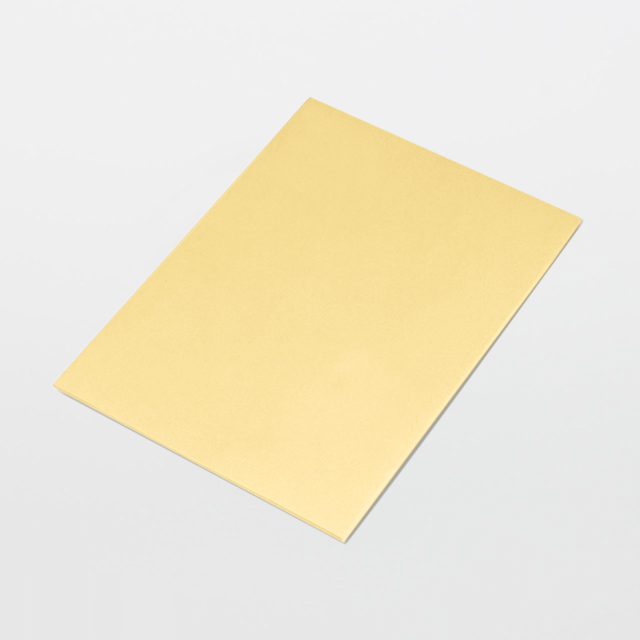
Texwipe TX5814 TexWrite® 22 Cleanroom Bond Paper — 8.5" x 11", Yellow, Medium-Weight Loose Sheets (22 lb)
TX5814 is Texwipe’s TexWrite® 22 cleanroom bond paper in yellow for rapid visual control (shift/area/project differentiation) while keeping documentation materials aligned to controlled-environment expectations. It is reinforced with a synthetic copolymer and is designed to reduce particle generation associated with standard office paper when technicians are printing, copying, recording data, and moving documents through airflow in ISO-controlled spaces. Manufacturer literature also notes the formulation avoids inorganic fillers (commonly used to increase opacity) that may contribute to ionic contamination risk in critical environments.
For over 35 years, SOS and Texwipe have been close partners, and SOSCleanroom is the authorized Master Distributor of ITW Texwipe for the United States market. That relationship supports continuity of supply, consistent product lineage, and dependable access to current manufacturer documentation for qualification packets, investigations, and audits.
For over 35 years, SOS and Texwipe have been close partners, and SOSCleanroom is the authorized Master Distributor of ITW Texwipe for the United States market. That relationship supports continuity of supply, consistent product lineage, and dependable access to current manufacturer documentation for qualification packets, investigations, and audits.
Published configuration (TX5814)
- Sheet size: 8.5" x 11" (21.6 cm x 28 cm)
- Color: Yellow
- Basis weight: 22 lb (TexWrite® 22 family)
- Format: Loose sheets, unlined
- Material/structure: Cellulose paper with polymer reinforcement (synthetic copolymer)
- Packaging (case): 250 sheets/pack; 10 packs/box (2,500 sheets per case)
- SOSCleanroom ship weight (case): 28.00 lbs
- Cleanroom environment: ISO Class 3–8; (legacy) Class 1–100,000; EU Grade A–D
- Autoclavable: Yes (see manufacturer autoclaving guidance/TechNotes referenced on the TDS)
- Country of origin: Made in USA
Low particle and fiber generation — and the reality check
TX5814 is designed to reduce particle generation versus standard paper. Even so, no paper product is truly “lint-free.” The cleanroom outcome depends on handling discipline: minimizing abrasion, avoiding rapid fanning of sheets, and keeping paper out of first-air near exposed critical surfaces.
Where technicians and engineers use TX5814
- Controlled documentation: work instructions, checklists, log sheets, forms, and batch/lot data capture.
- Color-coded control for shifts, areas, projects, or special handling workflows.
- Printing and copying in standard-duty and high-speed laser printers and photocopiers (manufacturer-published use case).
- Offset printing, manuals, and controlled data transfer where page quality and edge precision matter.
Compatibility notes (wipe-down tolerance and sterilization)
- Autoclave use: TX5814 is published as autoclavable. In regulated programs, qualify under your exact cycle (temperature, time, packaging configuration, and post-cycle handling) and validate that readability/handling characteristics remain acceptable after sterilization.
- IPA / solvent wipe-down of loose sheets: Paper wipe-down tolerance is not stated as a product spec. As a practical contamination control, avoid wiping loose sheets with IPA/solvents. Solvent contact can drive tide marks, curl, residue rings, toner offset, and elevated paper dusting after dry-down.
- DI water / aqueous contact: Not stated as a spec. If contact is unavoidable, validate for curl, edge wicking, fiber release, and print stability before standardizing.
Particle-shedding risk management
- Keep packs sealed until point of use: Stage only the shift quantity; keep the remainder sealed to reduce handling abrasion and airborne deposition.
- Avoid fanning sheets: Fanning near airflow can release particles and pull fines onto the sheet surface. Separate sheets slowly and deliberately.
- Control the document zone: Use a dedicated clean writing/printing staging surface (tray/clipboard) rather than process benches where residues transfer easily.
- Glove moisture control: Keep solvent-wet gloves away from paper. Solvent carryover is a common root cause for smearing, residue transfer, and toner/ink offset.
- Static discipline: In low humidity, paper can attract fines. Store flat and closed; avoid rubbing sheets against garments during transport.
Printer/copier setup guidance (reduce jams and contamination)
- Load from sealed packs: Open packs only when loading to reduce humidity effects and surface deposition.
- Keep trays and rollers clean: Dirty pickup rollers can transfer residue and shed debris onto sheets. Clean per your site SOP before loading cleanroom paper.
- Do not overfill: Overfilled trays increase edge scuffing and curl—both increase paper dusting and jam risk.
- Allow print cool-down: Let toner cool/set before stacking or inserting into binders to reduce offset transfer and smearing.
Typical performance characteristics
Values below are published as typical analysesFeatures
- Smearing / offset transfer: Usually from solvent-wet gloves, wet benches, or stacking before toner cool-down. Prevent with glove moisture control, a dedicated dry document zone, and a consistent print-to-cool cadence.
- Paper dusting (particle shedding): Driven by abrasion (edge scuffing, aggressive separation, rubbing pages on benches). Prevent by slow separation, flat transport, and keeping packs sealed until needed.
- Residue rings / tide marks: Typically from IPA/DI water contact. Prevent by avoiding wipe-down of loose sheets; validate if contact cannot be avoided.
- Static attraction: Fine particles cling in low humidity. Prevent with closed storage, minimal rubbing during transport, and adherence to site ESD/environmental controls.
- Jams / curl: Often from humidity swings and overfilled trays. Prevent by loading from sealed packs, keeping trays clean, and avoiding overfill.