

- 30-day returns
- Fast shipping
- Secure payments
- Over 300,000 products
age_group:
18+
category:
Stationery
country_of_origin:
USA
gender:
Unisex
manufacturer:
Specialty Optical Systems / SOS Cleanroom
mpn:
TX5862 CASE
sub_brand:
ITW TEXWIPE
type:
Stationery
Product Description
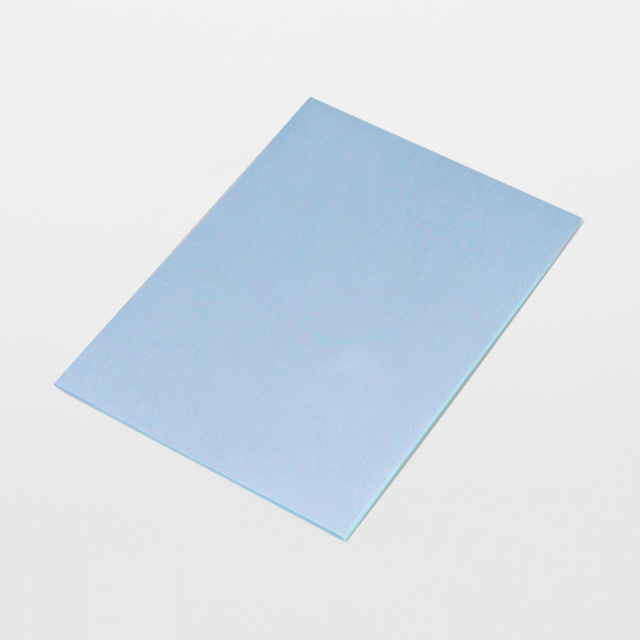
Texwipe TX5862 TexWrite® 18 Light-Weight Cleanroom Paper — 8.5" x 11", Blue, Unlined
TX5862 is a cleanroom documentation paper engineered to reduce the particle generation risk associated with ordinary office paper while maintaining reliable print and copier performance. It is intended for controlled environments where paperwork is necessary, but uncontrolled cellulose shedding, toner offset, and residue transfer are not acceptable.
For over 35 years, SOS and Texwipe have been close partners, and SOSCleanroom is the authorized Master Distributor of ITW Texwipe for the United States market. That relationship supports continuity of supply, consistent product lineage, and dependable access to manufacturer documentation used for qualification and audit readiness.
For over 35 years, SOS and Texwipe have been close partners, and SOSCleanroom is the authorized Master Distributor of ITW Texwipe for the United States market. That relationship supports continuity of supply, consistent product lineage, and dependable access to manufacturer documentation used for qualification and audit readiness.
Where technicians and engineers use TX5862
- Cleanroom manuals, work instructions, and point-of-use job packets where office paper is prohibited.
- Note taking and data transfer at carts, benches, and inside controlled documentation stations.
- Forms for maintenance rounds, calibrations, and process checks that must stay inside the controlled space.
- Offset printing and standard-duty / high-speed laser printer and photocopier workflows (per manufacturer applications).
Cleanroom paper still requires handling discipline
The biggest contamination events tied to paperwork are operational: aggressive page fanning, rubbing edges on benches/carts, wet-glove handling, and stacking freshly printed sheets before toner has fully set. Treat documentation materials as controlled components: open only what you need, keep stacks covered, and define how printed sheets are staged and moved.
Published configuration
- SKU: TX5862
- Sheet size: 8.5" x 11" (21.6 cm x 28 cm)
- Color / format: Blue, unlined
- Material/structure: Cellulose paper with a polymer reinforcement (TexWrite® is reinforced with a synthetic copolymer)
- Packaging: 250 sheets per pack; 10 packs per case (2,500 sheets total)
- Cleanroom environment: ISO Class 3–8 (Class 1–100,000); EU Grade A–D
- Autoclavable: Yes (validate your cycle and post-sterilization legibility/handling requirements)
- SOSCleanroom availability: 7 - 10 Business Days
- SOSCleanroom listed weight: 24.00 lbs
Typical performance and contamination characteristics
The values below are published as typical analyses for TexWrite® 18 loose leaf sheets. Use them for risk assessment and qualification planning, not as acceptance criteria.
| Property | Typical value | Why it matters on the floor |
|---|---|---|
| Basis weight | 70 g/m² | Light-weight sheet for routine documentation without bringing in uncontrolled office paper. |
| Caliper | 4.2 mil | Helps predict stiffness/handling and how sheets behave in feeders and on carts. |
| Opacity | 71% | Affects readability and show-through when writing on both sides. |
| Surface resistivity (TM14 @ 55% RH) | 2.6 × 10⁹ ohms (2.6 × 10¹⁰ ohms/sq) | Useful context for static behavior in low-RH environments and fines attraction risk. |
| Particles (>0.5 µm) | 4.0 million particles/m² | Helps set expectations for “paper dusting” risk relative to uncontrolled paper sources. |
| Ion extractables: Sodium | 35 ppm | Relevant when ionic contribution is evaluated for sensitive processes. |
| Ion extractables: Chloride | 105 ppm | Relevant when chloride sensitivity is part of contamination risk review. |
Compatibility notes (printers, IPA/DI wipe-down tolerance)
- Printers/copiers (documented): Designed for excellent toner adhesion and heat resistance; intended for standard-duty and high-speed laser printers and photocopiers, and offset printing.
- IPA wipe-down (not stated as a pass/fail spec): IPA wipe-down tolerance for printed content and prolonged solvent contact is not published as a formal specification for TX5862. If your SOP requires wipe-down of documentation during transfer, qualify legibility and residue/offset risk under your actual IPA strength, contact time, and wipe method.
- DI/water wipe-down (not stated as a pass/fail spec): DI wipe-down tolerance is not published. If aqueous wipe-down is required, validate for feathering, swelling/curl, and ink/toner transfer after dry-down.
- Practical tip: If the document must be cleaned as it moves between areas, many facilities use a protective sleeve or controlled document pouch so the paper is not directly wiped.
Particle-shedding risk management
- Keep packs sealed: Open only what the shift needs; reseal or store in a closed document bin to reduce airborne deposition and edge scuffing.
- Avoid “fanning” in airflow: Separate sheets slowly; rapid fanning increases abrasion and can mobilize particles.
- Stage printed sheets properly: Allow toner to cool/set before stacking under weight to reduce offset transfer and smearing.
- Glove discipline: Do not handle sheets with solvent-wet gloves; wet contact drives smearing, residue rings, and transfer.
- Dedicated documentation zone: Keep paperwork away from product first-air and critical surfaces; use a clean tray or writing board.
Common failure modes
- Smearing / toner offset: Typically caused by stacking too soon, high stack pressure, or solvent-wet gloves. Mitigation: cool-down time, controlled staging, and glove moisture control.
- Paper dusting / particle shedding: Usually from abrasion (edge rubbing on carts, aggressive page separation, dragging sheets on benches). Mitigation: covered storage, controlled separation, and minimal sliding contact.
- Ink transfer: Often from using non-qualified pens/markers or closing stacks immediately after writing. Mitigation: standardize writing instruments and enforce dry-time discipline.
- Residue / tide marks: Caused by direct wiping of the sheet or solvent droplets drying unevenly. Mitigation: protect documents during transfer and avoid wiping the paper itself unless validated.
- Static attraction: In low RH, paper can attract fines. Mitigation: closed storage, minimal rubbing, and adherence to facility ESD/environment controls.
Storage and handling best practices
- Store packs flat in original packaging; keep in a closed drawer/bin rather than open shelving near traffic and returns.
- Segregate from office paper to prevent accidental crossover and uncontrolled paper sources entering the cleanroom.
- If the paper supports controlled records, standardize printer settings and acceptance checks (legibility, no offset after cool-down, consistent reproduction).
- Use a clean writing board or clipboard; do not use the sheet itself as a “bench cover” unless your SOP explicitly allows it.
Documentation
SOS-hosted Texwipe datasheet PDF (DS-5862, Effective: December 2009): Click Here
Texwipe manufacturer page (TX5862): Click Here
Texwipe Technical Data Sheet PDF (TexWrite® 18/22/30 Loose Leaf Sheets, US-TDS-043 REV. 2/23): Click Here
If you have any questions please email us at Sales@SOSsupply.com or give us a call at (214)340-8574.
Check out the AI ChatBot powered by SOSCleanroom data libraries - give it a try!
THIS IS NEW FOR 2026!
© 2026 SOS Supply. All rights reserved.