

- 30-day returns
- Fast shipping
- Secure payments
- Over 300,000 products
age_group:
18+
category:
Mops
country_of_origin:
USA
gender:
Unisex
manufacturer:
Specialty Optical Systems / SOS Cleanroom
mpn:
TX7113
sub_brand:
ITW TEXWIPE
type:
Mops
Product Description
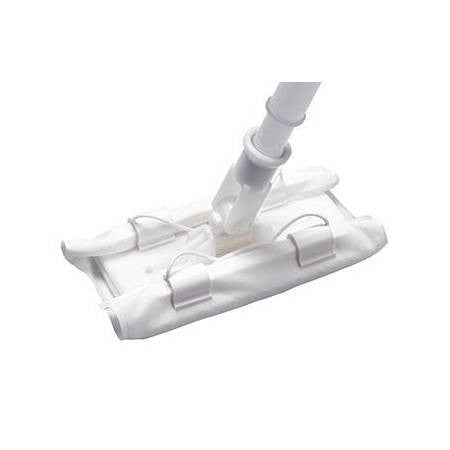
Texwipe TX7113 ClipperMop™ Replacement Head Assembly — 11" x 4" Head (Non-Sterile)
TX7113 is the replacement head assembly for the Texwipe ClipperMop™ system, used to secure one or multiple cleanroom wipers for controlled wiping of floors, walls, ceilings, isolators, hoods, and other confined areas. The ClipperMop head is designed to attach standard 12" x 12" cleanroom wipers (ClipperMop 11" size system) so teams can standardize on validated wipers while maintaining disciplined, repeatable mopping mechanics.
For over 35 years, SOS and Texwipe have been close partners, and SOSCleanroom is the authorized Master Distributor of ITW Texwipe for the United States market. That relationship matters in critical environments: it supports continuity of supply, stable product lineage, and fast access to the manufacturer documentation your QA/QC team expects.
For over 35 years, SOS and Texwipe have been close partners, and SOSCleanroom is the authorized Master Distributor of ITW Texwipe for the United States market. That relationship matters in critical environments: it supports continuity of supply, stable product lineage, and fast access to the manufacturer documentation your QA/QC team expects.
Published configuration (TX7113)
- Part number: TX7113
- Component: ClipperMop™ replacement head assembly only (non-sterile)
- Head size (as published): 11" x 4" (27.9 cm x 10 cm)
- System compatibility: For use with the 11" ClipperMop™ kit (TX7103)
- Head construction (as published): Celcon® thermoplastic mop head with tethered clips
- Clips/fastening method (as published): Four non-abrasive polyethylene tether clips secured with nylon fasteners for rapid wiper changes
- Conformable backing (as published): Flexible polyester pad (also referenced as a replaceable polyester foam pad in ClipperMop documentation)
- Case packaging (as published): 1 replacement head / case
- Cleanroom environment (as published for ClipperMop series): ISO Class 3–7; EU Grade A–D
Control point: the wiper is the “wear surface”
TX7113 is the tool head, but your wiper selection and change frequency drive contamination control. No wiper is truly zero-lint. Use qualified low-linting cleanroom wipers, load them without overhandling, and change them before they redeposit residue or drag particles across the surface.
System compatibility map (build and maintain your ClipperMop™)
| Component | Part number(s) | What it does | Published packaging |
|---|---|---|---|
| Replacement head assembly (this item) | TX7113 | Restores the ClipperMop™ head assembly for continued wiper-based mopping | 1 replacement head / case |
| Compatible kit (11" head system) | TX7103 | ClipperMop™ kit with 11" x 4" head assembly and telescoping handle | 1 kit / case |
| Replacement pads (11" ClipperMop™) | TX7111B | Polyester replacement pads/kit used with the 11" ClipperMop™ size | 10 pads & fasteners per bag; 10 bags / case (as published) |
| Replacement clips/fasteners | TX7102C | Polyethylene tether clips and nylon screws for TX7102/TX7103/TX7112/TX7113 | 4 clips / bag; screws per bag; 20 bags / case (as published) |
Practical cleanroom use guidance (technicians and engineers)
- Wiper loading discipline: Pre-stage a clean stack, load the wiper with minimal folding/handling, and secure all four clips so edges do not flap (flapping edges shed and redeposit).
- Wet control: If using pre-wetted wipers or applying solution, aim for “damp-cleaning” rather than saturation. Over-wet mopping drives streaking, slows dry-down, and can mobilize residues.
- Stroke mechanics: Use straight, overlapping strokes. Rotate/flip the wiper face to a clean area before you see gloss change, drag, or visible residue lines.
- Edge/constraint areas: In corners, around legs, and under lips, slow down and keep the head low-profile and flat. Do not “roll” the head onto the edge of the thermoplastic body.
- Change frequency: Treat the wiper as single-use per defined zone/segment (per CCS). When in doubt, change early; reusing a loaded wiper is a common root cause of recontamination.
- Post-use containment: Remove the wiper without snapping it (snap aerosolizes). Bag-out per waste stream, then wipe down/contain the tool before leaving the room or moving zones.
EU GMP Annex 1 alignment notes (how this supports a CCS)
- Risk-based CCS execution: A wiper-based mop head supports defined “single-pass” or “defined-segment” wiping strategies in aseptic/sterile manufacturing where redeposition risk must be controlled.
- Validated cleaning/disinfection: Pair the head with qualified wipers and your validated disinfectant set (including sporicidal rotation where required). Follow validated contact times and avoid re-wetting already-cleaned zones.
- Material transfer discipline: Keep TX7113 in original packaging until use, stage in a controlled transfer bin, and prevent cross-zone transport without defined wipe-down/bag-out steps.
- Documentation and traceability: Standardize on a defined tool build (head + clips + pads + wiper type) so deviations and investigations can tie back to known configurations.
Compatibility and wipe-down notes
- Wiper compatibility (as published): ClipperMop™ is designed for standard 9" x 9" or 12" x 12" cleanroom wipers; the 11" system is commonly paired with 12" x 12" wipers.
- Dry vs. pre-wetted use (as published): The system may be used with dry or pre-wetted wipers (and sterile or non-sterile wipers, depending on your program requirements).
- Sterilization compatibility (as published for ClipperMop system): ClipperMop documentation describes compatibility with sterilization by gamma irradiation, chemicals, vaporized hydrogen peroxide (VHP), or ethylene oxide (EO). Qualify TX7113 under your site conditions before standardizing.
- Autoclave: Not stated for TX7113 replacement head assembly. Use only when an autoclave-rated configuration is explicitly published and qualified by your CCS/SOP.
Technical snapshot (SEO-friendly reference)
| Attribute | Published value | Notes (qualification context) |
|---|---|---|
| Head size | 11" x 4" (27.9 cm x 10 cm) | Build your CCS around the wiper size and the surface segment length per change |
| Head body material | Celcon® thermoplastic (as published) | Confirm chemical compatibility with your disinfectant set before deployment |
| Clip design | 4 polyethylene tether clips with nylon fasteners (as published) | Clip engagement is a primary contamination-control step (prevents drag, flapping, redeposition) |
| Wiper modes | Dry, pre-wetted, sterile or non-sterile wipers (as published) | Select sterile/pre-wetted based on zone grade, CCS, and validated cleaning process |
| Cleanroom environment | ISO Class 3–7; EU Grade A–D (as published for series) | Use within your validated mopping SOP, zoning, and environmental monitoring strategy |
Common failure modes
- Streaking / residue lines: Typically from over-wet wipers, insufficient contact time discipline, or pushing solution rather than removing it. Prevent with controlled wetting and defined “clean-to-dirty” passes.
- Wiper slippage / flapping edges: Caused by incomplete clip engagement or torn wiper corners. Prevent by securing all four clips and replacing wipers at the first sign of tearing.
- Particle shedding / redeposition: Usually from reusing loaded wipers or dragging a saturated wiper across dry surfaces. Prevent with early change frequency and segment-based cleaning.
- Cross-zone carryover: Tool moved between areas without defined wipe-down/bag-out. Prevent with transfer discipline aligned to your CCS and room zoning rules.
- Static attraction (low humidity): Can pull fines to the wiper face and then redeposit. Prevent by following site ESD/ionization controls and avoiding rapid rubbing of plastics against garments.
Storage and handling best practices
- Keep TX7113 in original packaging until introduction into the controlled area.
- Stage the head assembly in a dedicated, clean transfer bin; avoid placing it on floors, carts with mixed-use tools, or non-qualified shelving.
- Inspect clips and the pad interface before each use; damaged clips or pad surfaces are a frequent cause of wiper instability and redeposition.
- Maintain tool segregation by zone (or implement validated wipe-down/bag-out) to prevent cross-contamination between areas.
Documentation
SOS-hosted Texwipe datasheet (ClipperMop™ DS-7102, Effective: December 2009): Click Here
Texwipe ClipperMop™ Technical Data Sheet (US-TDS-058 Rev. 11/21): Click Here
Texwipe manufacturer page (TX7113): Click Here
Last updated: January 9, 2026
If you have any questions please email us at Sales@SOSsupply.com or give us a call at (214)340-8574.
Check out the AI ChatBot powered by SOSCleanroom data libraries - give it a try!
THIS IS A NEW FEATURE FOR 2026!
© 2026 SOS Supply. All rights reserved.