

- 30-day returns
- Fast shipping
- Secure payments
- Over 300,000 products
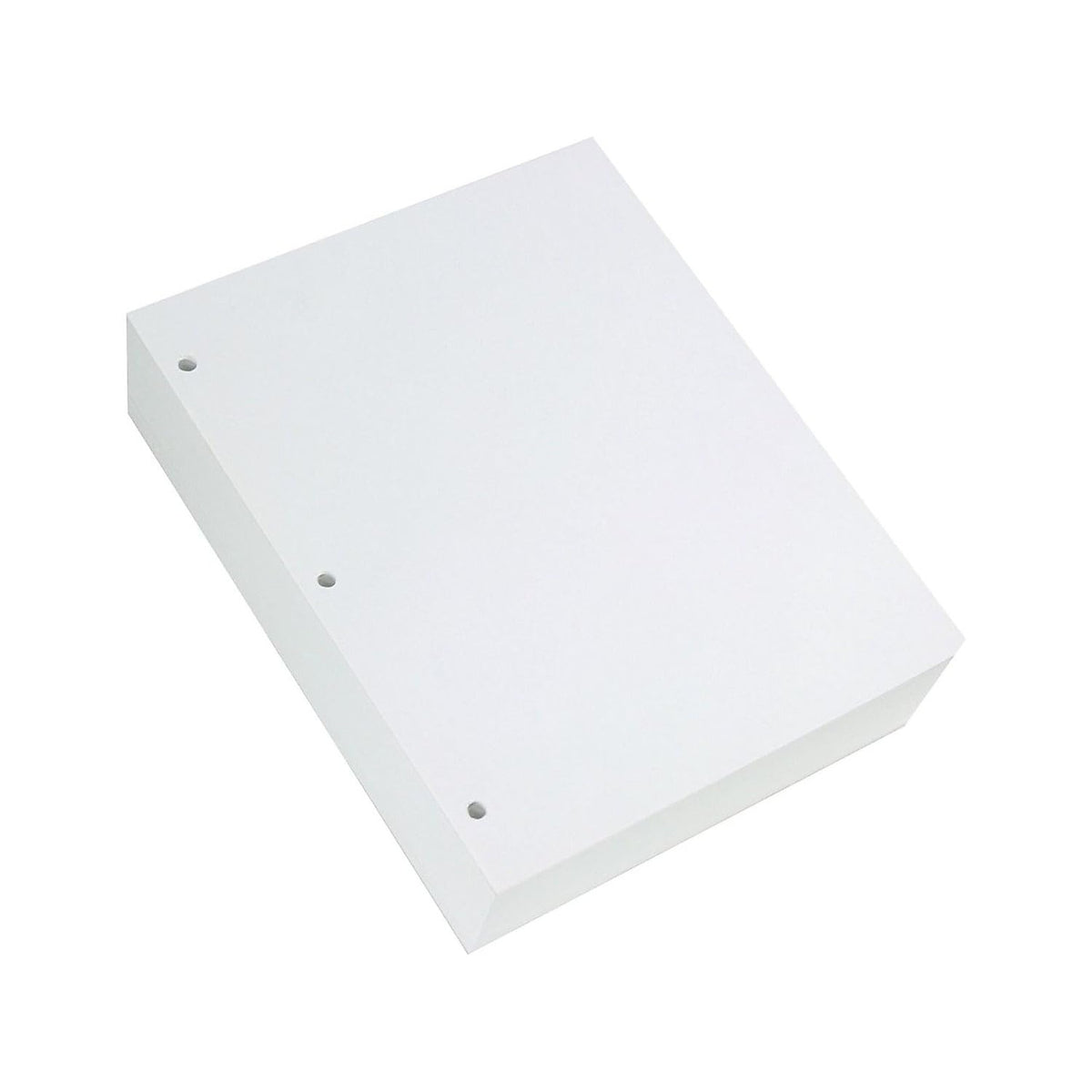
Unitek Clean-Write® 22 lb Cleanroom Paper — 8.5" x 11", 3-Hole Punched, White (CRP0660-3H-W)
This Unitek Clean-Write® saturated cellulose cleanroom paper is 3-hole punched for binder-ready documentation inside controlled environments. It is designed for technician paperwork that must enter the room without introducing typical office-paper shedding and fillers, supporting batch records, equipment logs, travelers, QC checklists, maintenance sign-offs, and line-side notes. The sheet construction is published as cellulose base paper saturated with synthetic latex, and the line is described as impregnated and coated with a polymar formula intended to obstruct particle generation and help prevent chemical exportation.
Because cleanroom paper is a controlled input, treat it like any other contamination-managed component: define how it is introduced, where it is stored, and how it is handled at the point of use so paperwork does not become a hidden particle or residue source.
Because cleanroom paper is a controlled input, treat it like any other contamination-managed component: define how it is introduced, where it is stored, and how it is handled at the point of use so paperwork does not become a hidden particle or residue source.
Published configuration (CRP0660-3H-W)
- SOSCleanroom SKU: CRP0660-3H-W
- Manufacturer part (as published): CRP06603HW (also shown as CRP0660-3H-W)
- Sheet size: 8.5" x 11"
- Format: Loose sheets, 3-hole punched (binder ready)
- Color: White
- Paper construction (as published): Cellulose base paper saturated with synthetic latex
- Series description (as published): Impregnated/coated with a polymar formula intended to obstruct particles and help prevent chemical exportation
- Printer compatibility (as published): Compatible with laser, ink jet, and toner-based printers
- Packaging: 250 sheets per pack (ream); 10 packs per case
- Cleanroom packaged: Yes (as published)
- Smear resistance: Smear resistant (as published)
- Cleanroom environment rating: Not stated for this paper; qualify to your ISO/GMP program requirements
Low particle and fiber generation — and the reality check
Cleanroom paper is engineered for low-linting, controlled handling. Even so, no paper product is truly “zero-shed.” Treat stationery as a contamination-controlled component: control when it is opened, how it is transported, and what touches the sheets to prevent paper dusting, residue transfer, and particle migration into the work zone.
Practical cleanroom use guidance (technicians and engineers)
- Introduction discipline: Keep paper in original cleanroom packaging until the point of use. Open only what the shift needs to reduce exposure time and airborne deposition.
- Binder-ready control: Use the 3-hole punched format to eliminate improvised punching at the bench (a frequent source of paper debris and inconsistent edge quality).
- Print staging: Print in a controlled staging area, then re-bag or cover stacks before transport. Uncovered stacks on carts are a common pathway for particle pickup.
- Glove discipline: Avoid wet gloves and solvent-wet fingertips. Moisture and solvents can accelerate smearing, residue transfer, and edge wicking.
- Work surface separation: Do not place sheets directly on critical benches where residues can transfer. Use a dedicated documentation zone or clean clipboard/binder backer.
- Correction practices: Avoid aggressive erasing or scraping. If your SOP allows, use controlled strike-through and initials to reduce abrasion-driven paper dusting.
Compatibility and wipe-down notes
- IPA wipe-down tolerance: Not stated for these sheets. If your program wipes documentation packets prior to room entry, qualify under your IPA concentration, contact time, and wipe material to confirm no residue transfer and no paper-edge wicking.
- DI water / aqueous wipe-down tolerance: Not stated for these sheets. If aqueous wipe-down is required, qualify to ensure sheets do not cockle, shed, or transfer residues after dry time.
- Printer/toner discipline: While the paper is published as compatible with laser, ink jet, and toner-based printers, qualification should include rub resistance, dry-time, and transfer risk under gloved handling.
- Wipe-down technique (if permitted by your SOP): Wipe outer packaging or the closed binder/packet first, avoid saturating sheet edges, and allow full dry time before opening to reduce smearing and residue migration.
Typical performance characteristics
Features- Smearing / ink transfer: Often driven by inadequate dry-time after printing, wet gloves, or wiping packets before they fully dry. Prevent with dry-time discipline and glove moisture control.
- Paper dusting / abrasion: Triggered by high writing pressure, scraping tools, aggressive erasing, or dragging sheets across rough benches. Prevent with controlled writing pressure and a dedicated documentation zone.
- Residue carryover: Transfer from benches, sleeves, carts, or solvent films on gloves. Prevent by keeping paperwork off critical surfaces and separating “documentation handling” from “process handling.”
- Particle shedding from poor introduction: Most commonly from opening packs in uncontrolled areas or leaving stacks uncovered. Prevent with controlled introduction and covered transport.
- Static attraction: In low humidity, paper stacks can attract fines and shed debris during rapid handling. Prevent by controlling handling speed and following site ESD/humidity controls.
Age group18+
CategoryStationery
Country of originUSA
GenderUnisex
ManufacturerSpecialty Optical Systems / SOS Cleanroom
MpnCRP0660-3H-W
Sub brandUNITEK
TypeStationery